Basildon.info – Basildon History
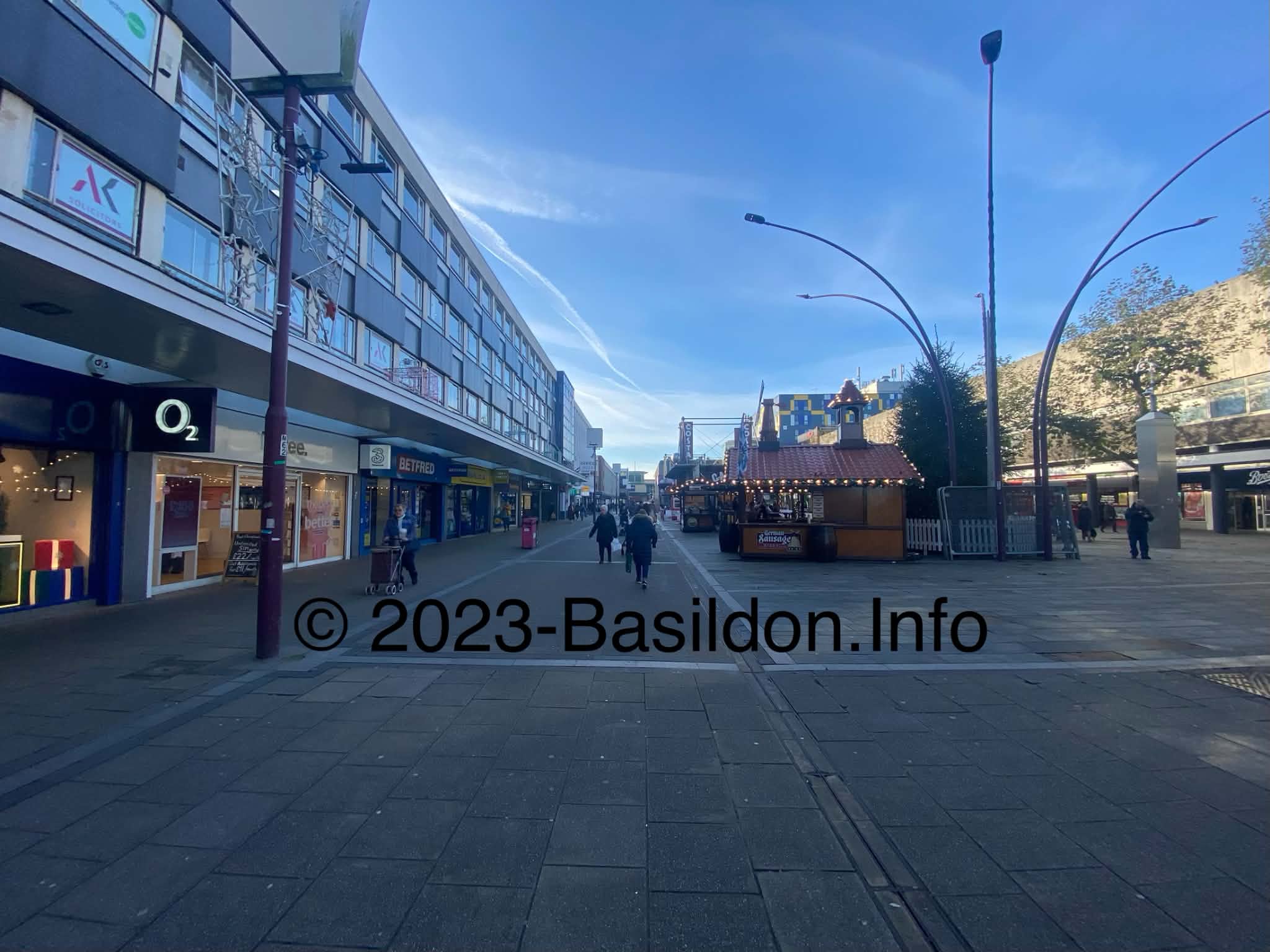
Town Square – The Early Years
Town Square was one of the first important shopping areas built in Basildon New Town. The first part of the square was completed in 1958, at a time when Basildon was growing quickly and new homes, roads and shops were being built across the town.
The square was designed as a modern pedestrian shopping area. It gave local residents a convenient place to shop close to home, rather than having to travel to older shopping centres such as Southend or Romford.
During its early years, Town Square contained a wide variety of businesses. There were clothing shops, shoe shops, furniture stores, electrical retailers, chemists, supermarkets, banks, cafés and many smaller independent businesses. Over the years, many of these original shops were replaced by well-known national chains, reflecting the changing nature of British high streets.
2–4 Town Square
HalfordsHalfords eventually occupied this unit, selling bicycles, car accessories and motoring equipment. The shop later moved away from Town Square to the Pipps Hill retail area.
Before Halfords, the premises had been used by Walmsley's Furniture Superstore, Target – WOW (Women's Own World) and Living Style Furniture. The building was demolished in 2025 as part of the Market Square redevelopment.
6–8 Town Square
RavenscourtRavenscourt was one of the earlier businesses at this location. The shop sold porcelain, glass and china. Over the years, the premises were occupied by several other retailers, including Halfords, Walmsley's Furniture Superstore, Target – WOW and Living Style Furniture.
The building was eventually demolished in 2025 as part of the redevelopment of this section of Town Square.
10–12 Town Square
H.T. Dwyer / Newswell / LloydsH.T. Dwyer was one of the early newsagents in Town Square. It was later followed by Newswell and other businesses before the premises became a branch of Lloyds Bank.
Lloyds remained here for many years before moving to number 9 Town Square in 2023. The original building was later demolished in 2025.
14–16 Town Square
Trustee Savings Bank / LloydsThis unit was originally occupied by the Trustee Savings Bank. As the banking industry changed, the branch later became part of Lloyds TSB.
Lloyds eventually moved its Town Square branch to number 9 in July 2023. The old building at 14–16 was demolished in 2025.
18–20 Town Square
Lewis Separates / Stratford Photographic Store / FlaumsLewis Separates was an early ladies' clothing shop. The premises later became Stratford Photographic Store, where customers could buy photographic equipment and have photographs developed.
Flaums and Sheila Anthony were among the later businesses to use the premises, before Lloyds TSB eventually occupied the unit. The building was demolished in 2025.
22–24 Town Square
Turners / Drapes / Card WarehouseTurners was originally a shoe shop, while Drapes later sold curtains and other soft furnishings. In more recent years, the premises were occupied by Card Warehouse and Paperbox, selling greeting cards, posters and related products.
The unit eventually became vacant and was not re-let before the building was demolished in 2025.
26–28 Town Square
Mayes / James Woodhouse & Son / Cash ConvertersMayes was one of the original Town Square businesses and opened in 1958. The shop sold ironmongery, tools and hardware, providing local residents with many of the practical goods needed in everyday life.
James Woodhouse & Son later occupied the premises and sold furniture and home furnishings. In later years, the shop became Cash Converters and then Cash Mart, buying and selling second-hand goods.
This building was especially important because of the large abstract mosaic on its frontage. The mosaic was created in 1958 by artist Geoffrey Clarke and became an important piece of public art in Basildon.
When the building was demolished in 2025, the mosaic was carefully saved because of its historical and artistic importance.
30–36 Town Square
Roses Fashion Centre / Medi-Care / SuperdrugRoses Fashion Centre originally sold ladies' clothing. The premises later became Medi-Care and then Superdrug, selling medicines, health products, cosmetics and toiletries.
Other businesses, including Inside Out and Now – Fashion for Less, also occupied the units. The buildings were demolished in 2025 as part of the redevelopment.
38–40 Town Square
Barratts / Going Places / Sony Centre / West End ShoesBarratts was a well-known shoe shop and became one of the familiar names in this part of Town Square. Going Places later used the premises as a travel agency, helping customers book holidays and arrange travel.
The Sony Centre later sold televisions, audio equipment and other electrical products. West End Shoes was one of the later occupants. The building was demolished in 2025.
42–44 Town Square
Rentaset / Silver Carpets / McDonald'sRentaset was an early television rental business. It later became associated with Radio Rentals, reflecting a time when many families rented their television rather than buying one outright.
Silver Carpets later occupied the premises before McDonald's arrived. The restaurant became one of the more recognisable modern businesses in this part of Town Square.
The building was demolished in 2025 as part of the redevelopment.
46–48 Town Square
Littlewoods / McDonald'sLittlewoods was an important retailer in Basildon and sold a wide range of goods, including clothing, household products and food.
The premises later became another McDonald's restaurant. The building was demolished during the 2025 redevelopment.
50–52 Town Square
Littlewoods / Our Price / Everything's One Pound / MartLittlewoods originally occupied this unit and sold a mixture of clothing, household goods and other products.
The premises later became Our Price, a popular music shop selling records, cassette tapes and CDs. In later years, discount retailers including Everything's One Pound and Mart occupied the unit.
The building was demolished in 2025.
54–56 Town Square
Marilyn of London / Oliver's / Baker's Oven / GreggsMarilyn of London was a ladies' fashion shop. Oliver's later occupied the premises as a bakery and restaurant, before Baker's Oven became a familiar name in the square.
Baker's Oven sold bread, cakes, sandwiches and other bakery products. The business was eventually rebranded as Greggs.
Greggs later moved into the West Pavilion of Town Square, where it became one of the final shops operating in this part of the old square before demolition began.
58–60 Town Square
? Shoes / DolcisThis unit was originally occupied by a shoe shop whose name is not clearly recorded in the surviving historical records.
Dolcis later occupied the premises and became a familiar high-street footwear retailer. The business eventually moved to the Eastgate Centre.
The original building was demolished in 2025.
62–64 Town Square
James Walker / Carphone Warehouse / Fone TrendzJames Walker was an early jeweller and silversmith, selling jewellery and related goods.
Many years later, the unit became The Carphone Warehouse as mobile phones became an increasingly important part of everyday life. Fone Trendz later occupied the premises, concentrating on mobile phone sales, accessories and repairs.
The building was demolished in 2025.
66–68 Town Square
Salisburys / Phones 4uSalisburys originally sold clothing and handbags. The premises later became Phones 4u, which sold mobile phones, contracts and accessories during the rapid growth of mobile phone ownership.
The unit disappeared when the original buildings in this section of Town Square were demolished in 2025.
70–72 Town Square
Lewis Separates / Chelsea Girl / Y Shoes / MallardLewis Separates was an early clothing retailer. In 1965, the shop became Chelsea Girl, a fashion retailer that became particularly associated with changing youth fashions.
Y Shoes later occupied the premises, selling footwear and clothing. Mallard subsequently became one of the later businesses at this location, operating as a jewellery and pawnbroking business.
Mallard eventually moved to number 92 Town Square. The building was demolished in 2025.
74–76 Town Square
John Walton / John Kent / Bristol & West / Britannia Building Society / MallardJohn Walton was one of the most important original businesses in Town Square. The men's and schoolwear shop opened on 6 December 1958 and was officially opened by actor and comedian Arthur Askey.
The shop sold men's clothing, schoolwear and fashionwear. It became one of the familiar names associated with the early years of Basildon's new town centre.
John Kent later occupied the premises, followed by Bristol & West and Britannia Building Society, which used the unit for financial services.
Mallard later moved into the building, operating as a jeweller and pawnbroker. The building was finally demolished in 2025.
78–80 Town Square
Davants / Hardy & Co / Harris Carpets / Next / Priceless ShoesDavants Furnishing Centre was an early furniture and home-furnishing business. Hardy & Co later operated from the premises, followed by Harris Carpets, which specialised in carpets and flooring.
Next later occupied the unit before moving to the Eastgate Centre. Priceless Shoes became one of the later occupants, continuing the building's long association with footwear.
This section of Town Square survived the 2025 demolition of numbers 2–76 and remains part of the town centre.
82 Town Square
Kelleys Radio / Exchange Travel / Hogg Robinson TravelKelleys Radio sold hi-fi equipment, records and cassette tapes. The business later moved to the Eastgate Centre.
Exchange Travel and Hogg Robinson Travel subsequently occupied the premises as travel agencies. Customers could use these businesses to arrange holidays, flights and other journeys.
84 Town Square
Dorothy Perkins / Jewellers Guild / Future Zone / Electronics Boutique / Game / GamestationDorothy Perkins originally sold ladies' clothing and shoes. The premises later became Jewellers Guild before changing into Future Zone, a retailer specialising in video games and computer entertainment.
Future Zone eventually became Electronics Boutique, which later became Game. Gamestation subsequently occupied the unit, continuing its long connection with video games and gaming equipment.
86 Town Square
True Form / Manfield / Our Price Video / Playhouse Video / AllTrue Form and Manfield were both associated with footwear. The unit later became Our Price Video and Playhouse Video, reflecting the popularity of video rental and home entertainment during the 1980s and 1990s.
All:Sports later occupied the premises, selling sports clothing, footwear and equipment.
88 Town Square – Keay House
Keay House / Southgate HouseNumber 88 was different from the smaller shop units because it was also an office building. It was named Keay House after Sir Lancelot Keay, the first chairman of Basildon Development Corporation.
The building housed a wide range of professional and public services over the years. These included solicitors, accountants, dentists, council departments and other offices.
During the regeneration of Town Square in the 1990s, part of Keay House was demolished. The remaining upper section became known as Southgate House.
90 Town Square
ShaletsShalets was a ladies' fashion and drapery shop. It was one of the early clothing businesses in this part of Town Square and remained here for many years before eventually closing.
92 Town Square
Shalets / True Form / Miss Poly Shop / J.D. Sports / MallardShalets originally sold ladies' fashion and drapery. True Form later operated as a shoe shop, followed by Miss Poly Shop, which concentrated on ladies' fashion.
J.D. Sports later occupied the unit, selling sportswear and fashion clothing, before relocating to the Eastgate Centre.
Mallard subsequently operated from the premises as a jeweller and pawnbroker. The business had previously occupied number 70–72 Town Square.
94 Town Square
Burton Tailoring / Adams Menswear / ChildrenswearBurton Tailoring was an early menswear business. Adams later occupied the premises and sold men's and children's clothing.
Adams eventually disappeared from the high street as the company closed its stores across Britain.
96 Town Square
Bata / Shoe SaveBata was an early and well-known shoe retailer in Town Square. The shop was later replaced by Shoe Save, continuing the unit's long association with footwear.
The premises remain part of the surviving Town Square area.
98 Town Square
Wendy Fine Fashions / John Collier / Clinton CardsWendy Fine Fashions sold ladies' clothing before the unit became associated with John Collier, a well-known men's tailoring business.
Clinton Cards later occupied the premises, selling greeting cards, wrapping paper and gifts. The business eventually relocated to the Eastgate Centre.
100 Town Square
D. Russell / Bishops JewellersD. Russell was originally associated with jewellery and later moved to number 7 Town Square.
Bishops Jewellers subsequently occupied the premises, continuing the unit's use as a jewellery shop.
102 Town Square
Crombey / Millets / Greenfields / FootholdCrombey was an early men's and boys' clothing business. Millets later occupied the unit, selling outdoor clothing and camping equipment.
Greenfields also operated as a camping and outdoor retailer. Foothold was one of the later occupants, selling footwear.
This unit shows how the types of businesses in Town Square changed over the decades, from traditional clothing shops to specialist outdoor and footwear retailers.
104 Town Square
North Thames Gas / H. SamuelNorth Thames Gas operated an appliance showroom and bill-paying counter from this unit. Customers could visit the shop to deal with their gas accounts and view gas appliances.
H. Samuel later occupied the premises as a jeweller, selling jewellery, watches and gifts.
106–114 Town Square
Grays Co-operative Society / London Co-operative Society / CRS / Living / PrimarkThis large three-storey building was completed around 1961 and became an important part of Town Square. Grays Co-operative Society moved into the building around December 1961.
The business later became the London Co-operative Society and then Co-operative Retail Services. The Living brand subsequently occupied the building.
The store provided a wide range of goods, including food, carpets, clothing, electrical products and furniture. There was also a restaurant and a Co-op dividend stamp counter.
In later years, the building became particularly well known for Primark. Primark eventually moved here from number 9 Town Square, giving the retailer a much larger store.
The building remains one of the most recognisable surviving parts of the original Town Square development.
1 Town Square
Marks & SpencerNumber 1 formed part of a later expansion of Town Square, constructed during the early 1970s. Marks & Spencer was the first business to open in these newer premises in November 1971.
The store sold clothing and food and also included a restaurant on the first floor.
Marks & Spencer remained at the location for many years before closing on 21 April 2018.
3–5 Town Square
Taylor's of Basildon / Army & Navy / BHSTaylor's of Basildon was an early department store in the later part of Town Square. The business was later followed by Army & Navy, which was part of the House of Fraser group.
The store eventually became British Home Stores, better known as BHS. BHS sold clothing, household goods and other department-store products.
The shop finally closed in 2016 when BHS disappeared from British high streets.
7 Town Square
D. Russell / Mark One / Mk OneD. Russell originally operated as a jeweller. The premises later became Mark One and were eventually rebranded as Mk One.
The shop sold affordable fashion clothing and became part of the changing fashion retail scene in Town Square.
9 Town Square
Cater Brothers / Presto / Primark / PeacocksCater Brothers was an early supermarket at number 9 Town Square. It opened during the development of the new town centre and provided local residents with everyday groceries.
The supermarket was later rebranded as Presto, continuing its use as a food store.
Primark later occupied the premises, selling affordable clothing and fashion goods. Primark eventually moved to the much larger building at 106–114 Town Square.
Peacocks later occupied the shop, continuing its use as a fashion retailer before closing in 2012.
19 Town Square
Fine Fare / Shoppers Paradise / Dixons / Currys.digitalFine Fare opened here in October 1960 and became one of the important early supermarkets in the town centre.
The shop was later followed by Shoppers Paradise. Dixons subsequently occupied the unit as an electrical retailer, selling televisions, hi-fi equipment, computers and cameras.
The store later became Currys.digital before eventually closing.
21 Town Square
Timothy Whites / Boots / Blokker / British Gas / Millets / Books for FreeTimothy Whites was an early chemist and household goods retailer. Boots later occupied the premises, selling medicines, cosmetics, toiletries and photographic products.
Other businesses that followed included Blokker, British Gas and Millets. British Gas used the premises as an appliance showroom and bill-paying counter, while Millets sold outdoor clothing and camping equipment.
In later years, the premises were used by Books for Free, allowing people to take books away without charge.
21A Town Square
Music BoxMusic Box was a specialist entertainment shop selling videos and CDs. It operated during the 1990s and early 2000s before closing in 2002.
23 Town Square
WoolworthsWoolworths became one of the most familiar names in Town Square. The business first operated from a temporary shop at the market site in 1958 before opening its permanent Town Square store in February 1961.
The shop sold a huge variety of goods, including household products, electrical items, records, CDs, DVDs, toys and confectionery.
During the 1960s, the store also had a café, making Woolworths an important part of everyday shopping in the town centre.
Woolworths finally closed on 27 December 2008 when the company disappeared from British high streets. The large store was later divided into smaller units.
23A Town Square
CeX / Entertainment Exchange / WeBuyThe smaller unit created from the former Woolworths premises later became associated with second-hand entertainment and electronics.
Businesses such as CeX bought and sold used phones, DVDs, games and other electronic products. The business later relocated to the Eastgate Centre.
25 Town Square
J. SainsburyJ. Sainsbury opened at number 25 in November 1960, providing local residents with another supermarket in the centre of Basildon.
The supermarket eventually closed in 1980. The premises later became linked with the neighbouring Boots store.
Sainsbury's eventually returned to a much larger format at the Savacentre development at Eastgate.
27 Town Square
Boots / Timothy WhitesBoots occupied number 27 and became an important chemist in the early Town Square shopping area. The shop sold medicines, cosmetics, toiletries and photographic products.
Timothy Whites later occupied part of the premises, selling chemist and household goods.
29 Town Square
W.H. SmithW.H. Smith opened here in 1961 and became one of the longest-serving businesses in Town Square.
The shop sold newspapers, magazines, books, toys, records and later CDs and other entertainment products.
For many years, W.H. Smith was one of the last remaining links with the original generation of Town Square businesses. The store finally closed on 30 June 2025.
31 Town Square
Richard Shops / W.H. SmithRichard Shops originally sold ladies' fashionwear. The unit was later incorporated into the neighbouring W.H. Smith premises, giving the newsagent and bookshop additional space.
33 Town Square
Eastern Electricity Board / SeeboardThe Eastern Electricity Board operated an appliance showroom and bill-paying counter here. Customers could visit to deal with their electricity accounts and view electrical appliances.
The electricity business later became associated with Seeboard as the structure of the electricity industry changed. The premises were eventually used by other businesses.
What happened to the old Town Square?
Town Square changed enormously during its first seven decades. Many of the businesses that opened in the late 1950s and early 1960s eventually disappeared, while new national chains, discount stores, banks, restaurants and specialist retailers took their place.
The physical appearance of the square also changed. During the 1990s regeneration, part of Keay House was demolished and the remaining upper section became Southgate House.
Two glass retail pavilions were also built around 1998. One became home to Costa Coffee, while the other was occupied by Toni & Guy.
The biggest change came during the 2020s. Plans were developed for a new Market Square scheme, including new homes and retail space.
As part of the project, the original run of even-numbered shops from 2 to 76 Town Square was demolished during 2025.
The demolition marked the end of a large and important part of the physical Town Square that had stood since Basildon's early New Town years.
One of the most important pieces of the original development, the Geoffrey Clarke mosaic on number 26–28, was saved because of its historical and artistic value.
Although many of the original shops have now disappeared, their stories remain an important part of Basildon's history. The businesses that once occupied these buildings show how shopping, fashion, technology and everyday life changed over several generations.
Town Square is therefore more than simply a collection of shops. It is a record of Basildon's development from a new post-war town into the modern community it is today.