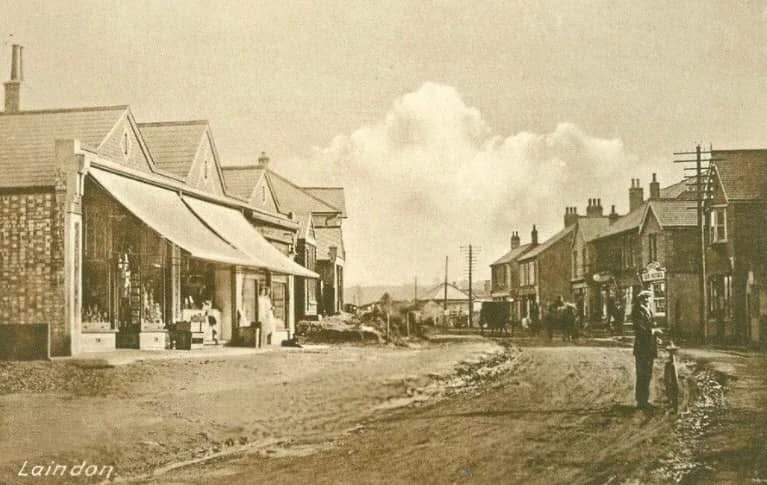
Laindon High Road Shops, Businesses & Services
Part 2 of the history of Laindon High Road, covering the specialist shops, services, trades and businesses that made the street a complete local shopping centre.
Ironmongers and Hardware Shops
One of the best-known businesses connected with Laindon High Road was T.E. Collings. Thomas Elijah Collings operated an ironmonger's business and was also associated with a North Thames Gas agency and cooker showroom. The business supplied the kind of practical household goods that families needed for maintaining their homes. Ironmongers were extremely useful businesses in an era when people repaired and maintained many more household items themselves.
The High Road also contained other businesses dealing in hardware, household goods and building-related products. Their presence reflected the growing needs of Laindon as more houses were built and the local population increased. These businesses were particularly important to tradesmen, farmers and householders who needed tools, fittings and practical supplies.
Electrical and Radio Businesses
As electricity, radio and television became increasingly common in British homes, the High Road gained businesses specialising in electrical equipment. Laindon Radio Electric Service & Music House, Laindon Radio & Television Service and Stanwood Radio were among the names associated with this trade. These businesses did more than simply sell equipment; they also provided repairs and technical services at a time when televisions and radios were expensive possessions that people expected to keep for many years.
The growth of electrical businesses shows how the High Road changed alongside wider society. Earlier shops had concentrated heavily on food, clothing and traditional household goods, while later businesses reflected the increasing importance of electrical appliances and modern technology in everyday life.
Clothing, Drapery and Haberdashery
Clothing and haberdashery were also strongly represented. Henbest's was one of the better-known names, while Johnston's, also associated with Slater's, operated as a haberdashery and dress shop. Other businesses sold wool, hosiery, drapery, clothing and soft furnishings. These shops were particularly important at a time when many clothes were repaired, altered or made at home rather than simply being replaced when they became worn.
Businesses such as these also provided materials for sewing and dressmaking. Wool, thread, buttons, fabrics and other items were everyday purchases for many families. The High Road therefore supplied not only finished clothing but also the materials people needed to make and maintain their own.
Hairdressers and Personal Services
The High Road also had businesses providing personal services. Victor Findlay operated a gentleman's hairdressing business, while other premises were used for specialist services and trades. These businesses were an important part of community life because residents did not simply visit the High Road to purchase goods; they also came there for services that were required regularly.
Chemists and Photographic Services
Chemists were another important part of the old High Road. S. Relph operated as a dispensing and photographic chemist, providing medicines as well as photographic services and other goods. Later businesses also occupied the premises. The combination of pharmacy and photography is a reminder of how much wider the range of services offered by traditional chemists could be compared with many modern pharmacies.
Cafés, Bakeries and Places to Eat
Laindon High Road was also a place where people could stop for food and refreshments. F.W. Hays operated a café alongside his tobacconist and confectionery business, while Shepherd's Restaurant and later Barton's Restaurant & Bakers provided food and bakery services. Cafés were particularly useful because many people walked to the shops from surrounding areas and could stop for a cup of tea before beginning the journey home. Local memories specifically describe refreshments as an important part of the shopping experience.
Newsagents and Tobacconists
Newsagents and tobacconists were widespread along the High Road. Businesses including M.G. Bersey & Co., H.J. Davis and George Bell supplied newspapers, magazines, tobacco, sweets and other small everyday items. These shops were important sources of local information as well as places to buy newspapers. Before the arrival of the internet, television news and modern digital media, newspapers were one of the principal ways people kept up with events in the wider world.
Local memories also mention Boons and Lings in one of the smaller shopping parades. Lings was remembered for toys and bicycles, while Boons sold sweets and newspapers. Photographs and memories preserved by the Laindon & District Community Archive have helped identify these businesses, although the archive notes that some of the surrounding premises remain uncertain.
Post Offices and Banking
Postal services were an important part of the High Road community. Laindon Station Post Office operated from the High Road, while North Parade Post Office served another part of the area. Historical records show that the North Parade Post Office was associated with the Boxshall family, who later emigrated to New Zealand. The existence of more than one postal facility demonstrates how important the High Road was to the surrounding population.
Banking services were also present. Barclays Bank operated from premises on the High Road, while other financial and insurance businesses were represented in the area at different times. The banks provided services that are now often handled online, including cash withdrawals, deposits, payments and financial advice.
Estate Agents and Property Businesses
Estate agents played an interesting role in the development of Laindon. Some of the earliest structures along the High Road were small wooden buildings used by estate agents. Alfred Rawley established his estate agency in 1919, while C. Cyster was also associated with estate agency and garden plants. These businesses were closely connected with Laindon's growth as new homes were built and the area became increasingly attractive to people looking for property.
Builders, Timber and Trades
The High Road and its surrounding area also supported businesses connected with building and construction. Johnson & Co., Churchill Johnson and Hadland's were associated with timber and building supplies around Station Wharf. These businesses supplied materials to the growing community and helped support the building work taking place throughout Laindon and the surrounding villages. Their presence is particularly significant because Laindon was gradually changing from a rural settlement into a much larger residential community.
The Variety of Businesses
One of the most remarkable features of old Laindon High Road was the sheer variety of businesses that could be found along it. The surviving historical research identifies well over the number of shops normally associated with a small rural community, although the Laindon & District Community Archive stresses that its list is not intended to be a complete or perfectly accurate register. Different businesses occupied the same premises at different times, while some names survived under new ownership or changed their type of trade.
This constant change means that there was never one fixed list of High Road shops. A business remembered by someone who grew up in Laindon during the 1930s might not have existed by the 1950s, while another shop may have opened later and remained familiar to residents for decades. The 1949 Basildon Development Corporation property survey is particularly useful because it provides a detailed snapshot of the High Road at that particular moment, but it does not represent the entire history of the street.