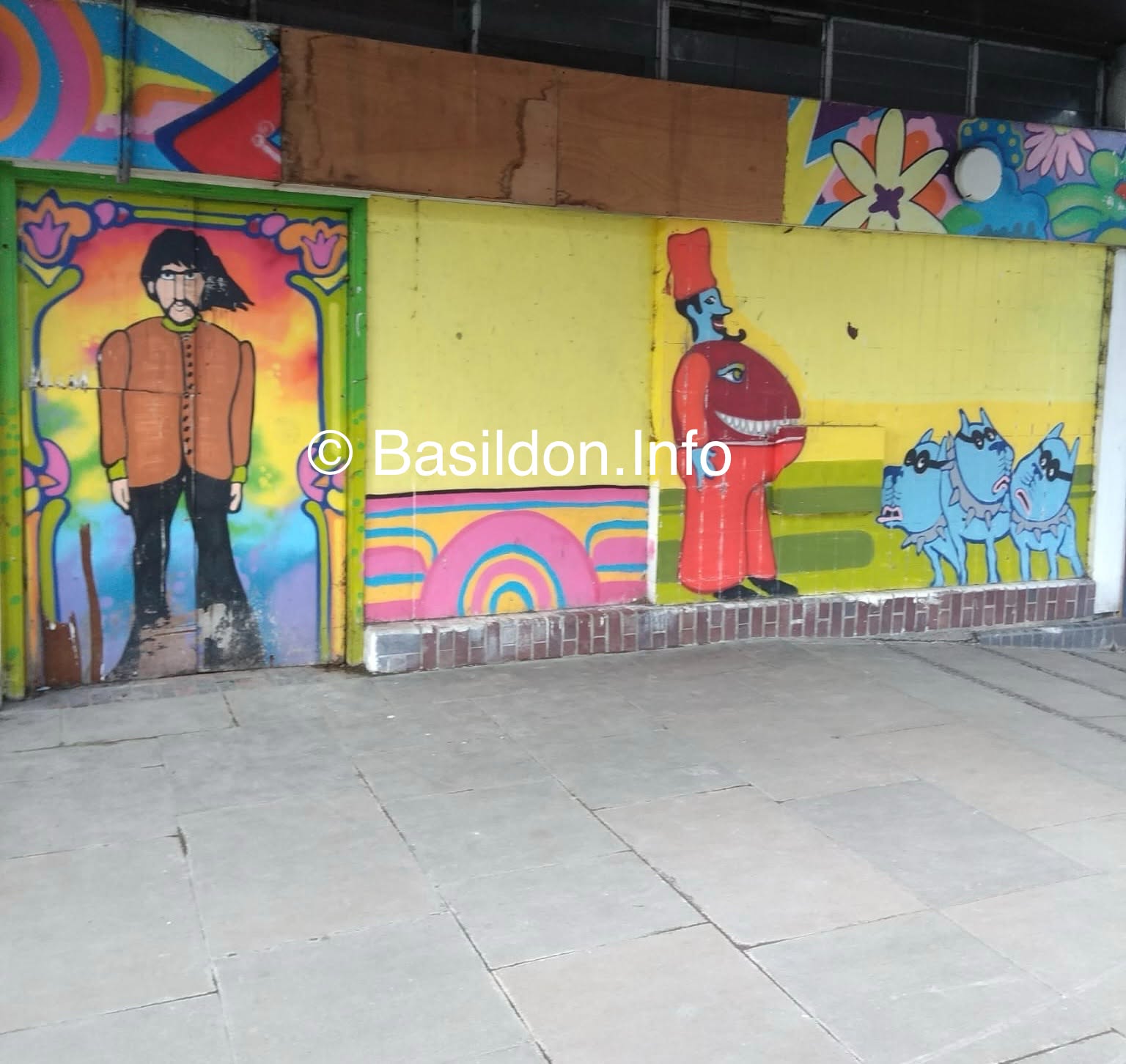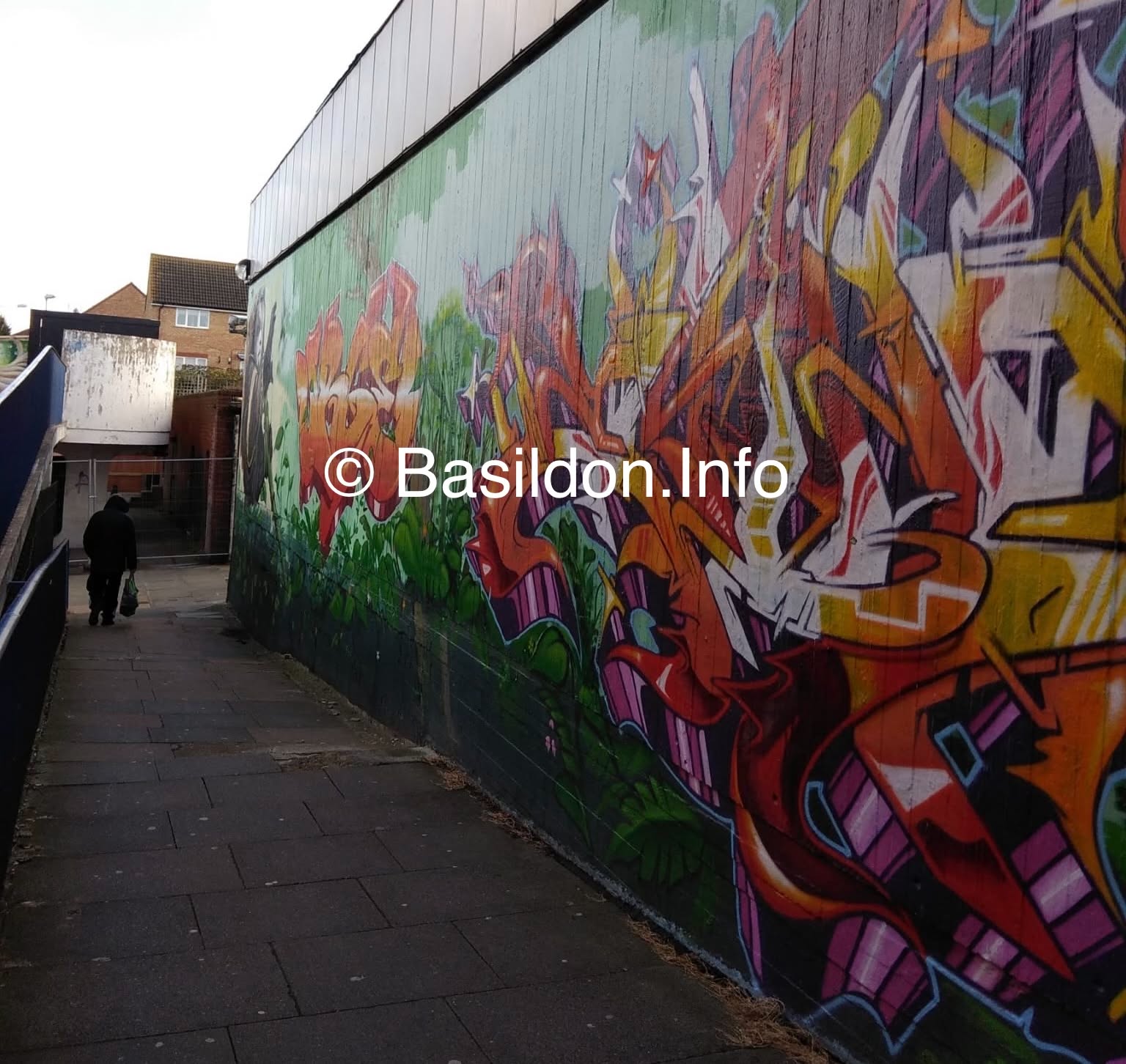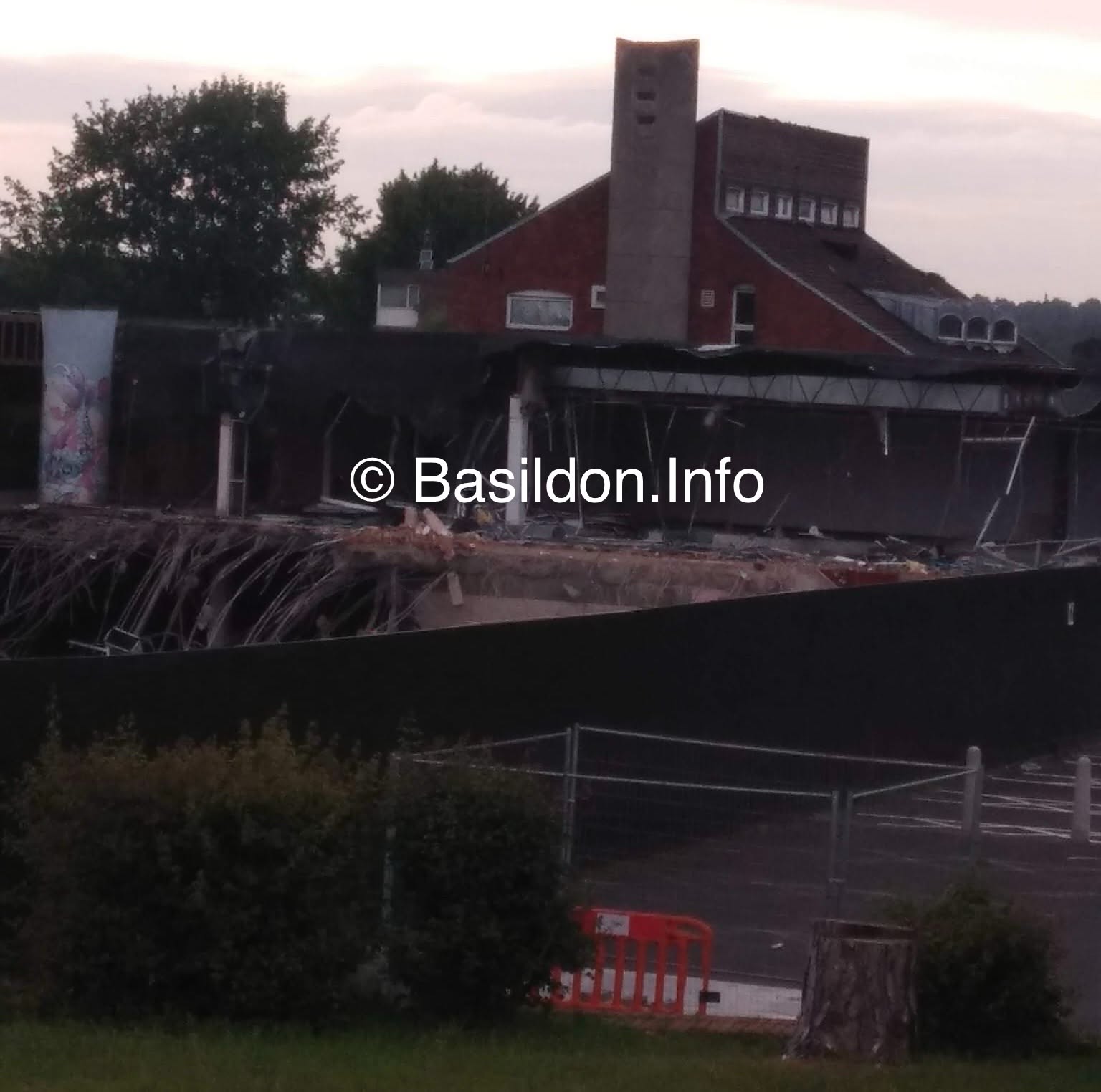
Laindon Shopping Centre
The Laindon Shopping Centre was one of the most important developments in the history of modern Laindon. Built as part of the post-war development of Basildon New Town, it was intended to provide a purpose-built shopping centre for the growing population of Laindon and the surrounding neighbourhoods. Construction began in September 1967, and the first shops started opening towards the end of 1969. The completed development contained around 44 shop units of different sizes and represented a major investment in the area, costing approximately £1 million at the time.
The centre was designed to replace the traditional collection of shops that had previously lined Laindon High Road. Rather than having dozens of small businesses scattered along a busy road, the new development brought many shops together into one planned shopping area. A service road and unloading area were constructed below the elevated shopping level, while the centre also provided parking and pedestrian areas. The development was intended to give Laindon a modern shopping environment suited to the rapidly growing New Town population.
The First Shops
Many of the first businesses to move into the new centre were already-established Laindon businesses. This meant that the centre initially retained some of the character of the old High Road while giving those traders modern premises. Among the earliest businesses were Stanwood Radio, T.E. Collings, Peachey's, A.G. Butler & Son, Lloyds Bank, Midland Bank and Keith's newsagent. The first shops began opening in late 1969 and early 1970.
The development also included a three-storey office building called Clock House. It contained approximately 18,000 square feet of office accommodation and became one of the most recognisable features of the centre because of its clock and large bell. A new Essex County Library was also incorporated into the development, while The Joker, a split-level public house operated by Truman's, opened around the end of 1970.
The Original Supermarkets
Supermarkets were an important part of the centre from the beginning. Unit 33-35 eventually became one of the main supermarket spaces and went through a remarkable sequence of different names. It began with Merit, followed by Budgen, then Cannon, Shoppers Paradise and later Kwik Save. The changing names reflect the way supermarket retailing changed during the centre's lifetime. The unit eventually became vacant before being used by the Hamelin Trust.
Another important supermarket space was units 43-45. This began as Kibby's before becoming International Stores. It was later rebranded as Gateway, then Somerfield and finally Co-operative. This means that one section of the centre passed through several generations of supermarket branding without necessarily changing its fundamental role as one of Laindon's main food-shopping locations.
Lloyds Bank and the Financial Businesses
Banking was another important part of the original centre. Lloyds Bank occupied units 1-2 and later became Lloyds TSB before eventually being replaced by other community and business uses. NatWest operated from units 14-15 before the premises eventually became vacant. Barclays Bank operated from unit 53 until 2000, after which the building remained vacant before being demolished in 2008.
The presence of several banks shows how different shopping centres were in the 1970s and 1980s. Banking was a regular part of high-street life, with customers visiting branches to withdraw money, pay bills, deposit wages and speak to staff. The later disappearance of the banks reflected the wider decline in branch-based banking and the changing way people managed their money.
The Butchers
Unit 3 was originally occupied by Dewhurst, providing the centre with a traditional butcher. The business was later replaced by Wright Price, which sold toys, cards, DIY, gardening and electrical goods. The unit eventually became vacant and was never successfully re-let before demolition.
There was also another important butcher in unit 42. Stanwood Radio originally occupied the unit before being taken over by Rumbelows. Later, the premises became The Prime Meat Co., bringing another butcher back into the centre. The changing businesses demonstrate how individual units could have completely different purposes during the centre's lifetime.
The Chemists
Unit 4-5 was originally occupied by Godfrey, a chemist that also offered photography, records, tapes and video hire. It was later replaced by Hills then Vantage and eventually Lloyds Pharmacy. The pharmacy relocated temporarily to a unit at the rear of the centre in March 2019 shortly before the old centre finally closed.
There was also a second pharmacy in unit 38. This began as Co-op Chemist and later became Well Pharmacy. Like Lloyds Pharmacy, Well Pharmacy was relocated to temporary accommodation shortly before the centre was closed and demolished. These businesses were among the services that remained important to local residents even during the later years when much of the centre was struggling.
Fish and Chips
Unit 16 was associated with Peachey's, and known as The Swinging Plaice, and eventually Fish 'n' Chick'n. This became one of the centre's food outlets and reflects the long tradition of fish and chip shops in British shopping centres. The business remained associated with the unit for many years before eventually closing in February 2019.
The Pop Inn and Akash Tandoori
Unit 17 was originally home to The Pop Inn, a café that included a jukebox and pinball machine. It later became Akash Tandoori Restaurant, offering a fully licensed restaurant and takeaway service. This was another example of the way the centre's food offering changed over time, moving from a traditional café towards more modern restaurant and takeaway businesses.
Clothing and Children's Shops
Unit 18 originally contained Mini Wear, which sold children's and baby clothing as well as wool. It was later replaced by Centre Fashions, followed by Abbey National, which became a bank after its demutualisation. Later occupants included Claims Express and Big Reds, followed eventually by a vacant unit and the Love Laindon improvement headquarters.
Unit 21 also went through several changes. It began as Laindon Furniture Stores, later becoming Howard Furniture, followed by First Edition, George's and eventually other clothing-related businesses. George's became known for clothing, schoolwear and babywear. The premises later became associated with a unisex hairdressing business and other uses.
Newsagents and the Post Office
Newsagents were an important part of the centre from the beginning. Keith's, associated with Keith Cullis and A. Martin, occupied unit 41 and sold newspapers, tobacco and stationery. The business was later known as Martins before eventually closing in 2018.
Unit 19 was originally occupied by The Newsbox and later by S & R Newsagents. It eventually became vacant. Unit 20 was particularly important because it contained the Crown Post Office. The Post Office remained one of the longest-running businesses in the centre and was the final business to leave before the old shopping centre was closed. It ceased trading on 2 April 2019, bringing nearly fifty years of trading in the original centre to an end.
Furniture and Household Businesses
The centre also had several furniture and household businesses. Laindon Furniture Stores was one of the original occupants of unit 21, while Howard Furniture later used the premises. Other businesses included K & E Discount Carpets in unit 36, providing carpets for local homes. The centre therefore offered more than just everyday convenience shopping; residents could also buy larger household goods and services locally.
Toys, Cards and Specialist Shops
Unit 22 was originally occupied by Handyman, selling cards, stationery and novelties. It later became Le Form, associated with footwear repairs. Unit 36 also had a particularly varied history, beginning with Playbox 2000, a toy shop, followed by K & E Discount Carpets, Conquest Auto Parts, Startrite Motor Spares and later Heley Bargains. The unit eventually became associated with community and charitable organisations.
Car Parts and Motor Businesses
The presence of businesses such as Conquest Auto Parts and Startrite Motor Spares demonstrates that the centre also provided services for motorists. These businesses supplied car accessories and motor spares at a time when vehicle ownership was becoming increasingly common. Startrite eventually relocated to Durham Road in Laindon, continuing its association with the local community outside the shopping centre.
Laindon Lanes Indoor Market
One of the more unusual developments in the centre's history was the creation of Laindon Lanes Indoor Market. Units 39-40 were originally occupied by the Co-op supermarket, but from 1985 they were converted into an indoor shopping area and café known as Laindon Lanes. The market remained for several years and provided a different type of shopping experience, with smaller traders operating inside the larger centre. Later businesses included ShoeSave, Baby Bits and the Sue Ryder charity shop.
Charities and Community Organisations
During the final years of the shopping centre, several empty units were temporarily used by community and charitable organisations. In 2017, three vacant units were made available to charities and a non-profit Community Interest Company. These included the former TSB unit, another vacant shop and unit 36. Organisations using the centre included the Community Advice and Support Scheme, Solidarity Care International and other community groups.
This was a sign of how dramatically the centre had changed. A development that had once been filled with banks, supermarkets, clothing shops, cafés and specialist retailers was increasingly being used for community purposes because commercial demand for the vacant units had fallen.
The Decline of the Centre
Although the Laindon Shopping Centre had been designed as a modern shopping destination, problems began to appear surprisingly early. A local newspaper report from October 1971 described the new centre as an “absolute mess”, with criticism of its condition and appearance. Local historical accounts also describe the centre as having struggled to live up to the expectations that had surrounded its construction.
Over the decades the centre experienced increasing competition from Basildon Town Centre, supermarkets, retail parks and changing shopping habits. Individual businesses closed or moved away, while some units remained empty. The centre nevertheless continued to serve the local population for many years, and several businesses remained there for decades.
Clock House and the First Failed Redevelopment
One of the first major changes to the centre came in 2008, when Clock House and the former library building were demolished. The clock itself had been removed in April 2008 and placed into storage. The owners at the time planned to redevelop the site, with proposals for new housing and approximately 40 new shop units around the former Clock House area. However, the proposed scheme stalled and the site remained largely boarded up for many years.
The failure of this first redevelopment attempt was significant because it left a major part of the centre looking unfinished. Instead of being replaced quickly with new shops and homes, the cleared area remained in an uncertain state. The centre therefore entered a long period of decline before a much larger regeneration scheme eventually emerged.
Swan Housing and Laindon Place
In May 2015, Swan Housing Association acquired the run-down centre with plans for a much more ambitious redevelopment. The proposed scheme was given the name Laindon Place. The intention was to demolish the old shopping centre and replace it with a combination of new homes, shops and community facilities. Basildon Council approved the planning application in February 2017, and work began in October 2018.
The redevelopment was supposed to provide a new future for the site, but the scheme did not proceed in the way originally intended. The old centre was eventually closed and demolished during 2019. By October 2019 the main shopping centre had disappeared, ending almost half a century of retail history on the site.
The Demolition of the Old Centre
The final closure was a major moment for Laindon. The Post Office was the last business to leave, closing on 2 April 2019. The main shopping area had already been closed to the public in March, and the remaining buildings were subsequently demolished. By October 2019 the old centre had been cleared.
For people who had grown up in Laindon, the demolition represented the disappearance of a major landmark. The centre had stood for around fifty years and had been part of everyday life for several generations. Shops had come and gone, but the physical buildings themselves had remained a familiar part of Laindon's landscape since the late 1960s.
The New Housing Scheme
The redevelopment was intended to replace the old shopping centre with a new mixed-use development containing housing, shops and community facilities. The project was eventually taken forward by Sanctuary after it acquired Swan Housing Association in 2023. Sanctuary's current regeneration plans are considerably different from simply rebuilding the old shopping centre. The emphasis is now on creating a new community hub with more than 205 affordable homes, new retail space, public areas and improved facilities.
However, the housing development has been affected by delays and changes to the original plans. Parts of the site have remained undeveloped for considerable periods, contributing to local frustration after the demolition of the old centre. The redevelopment has therefore become one of Laindon's most controversial and closely watched local projects, particularly because residents lost their traditional shopping centre before its replacement was fully delivered.
The New Lidl
The most visible part of the new regeneration is the construction of a much larger Lidl supermarket. The new store was planned as a major anchor for the redeveloped centre, replacing the smaller Lidl store that previously served the area. Sanctuary's plans included the larger supermarket together with 15 local shop units, more than 200 affordable homes and new public spaces.
The new Lidl is particularly important because it brings a major retailer back to the centre of Laindon after the disappearance of the old shopping centre's supermarkets. It provides a large modern food store while also acting as an anchor around which the remaining retail and residential development can be built.
The New Retail Units
The current regeneration is not intended to be simply a Lidl supermarket surrounded by housing. Sanctuary's plans provide for approximately 15 local shops alongside the supermarket. Earlier consultation material referred to 16 retail units and identified businesses such as Templemans Opticians and Wells Pharmacy as proposed occupants. The intention is to recreate a local high street environment, although on a much smaller and more modern scale than the original 1969 shopping centre.
The new development also includes parking and improved public spaces. Plans provide for space around the Laindon War Memorial and fountain, helping to give the regenerated area a stronger civic identity. The intention is to create a place that combines housing, shopping and community facilities rather than simply rebuilding the old centre in its previous form.
Changes to the Medical Centre Plans
The regeneration has also involved plans for healthcare facilities. Earlier proposals included an improved medical centre as part of the redevelopment. However, the plans have subsequently had to change as circumstances surrounding the proposed NHS facility developed. This has required Sanctuary to reconsider parts of the scheme while continuing with the wider regeneration.
What the New Development Means for Laindon
The new development represents a completely different approach from the original 1960s shopping centre. The first centre was designed primarily around retail, with shops, banks, supermarkets, a pub, a library and offices serving a rapidly expanding New Town population. The new scheme is much more heavily focused on housing, with more than 205 affordable homes forming a major part of the development alongside Lidl and smaller retail units.
This change reflects the wider pressures facing modern town centres. Shopping habits have changed dramatically since 1969, with supermarkets, retail parks, online shopping and larger commercial developments changing the way people buy goods. The new Laindon development therefore aims to provide the services that are most useful to residents today while also providing much-needed housing.
From 44 Shops to a New Community Hub
The transformation is striking when the two developments are compared. The original Laindon Shopping Centre contained around 44 shop units and supported a remarkable variety of businesses, including banks, supermarkets, butchers, chemists, restaurants, newsagents, clothing shops, furniture stores, electrical retailers and specialist traders. It also included Clock House, the library and The Joker public house.
The new development is smaller in terms of retail space but much larger in terms of residential accommodation. More than 205 affordable homes are planned alongside the new Lidl and local shops. This means that the centre of Laindon is moving from being primarily a shopping destination to becoming a mixed residential and community centre.
A New Chapter for Laindon
The story of Laindon Shopping Centre therefore spans more than half a century. It began in the late 1960s as a symbol of the modern New Town, replacing the old High Road shops with a purpose-built shopping centre. For decades it was an important part of everyday life, with generations of residents shopping in its stores, visiting its banks, using its Post Office, eating in its cafés and restaurants and meeting friends in the centre.
Its later decline was gradual rather than sudden. Businesses closed, units became vacant and attempts were made to regenerate parts of the site. The demolition of Clock House in 2008 was followed by a failed redevelopment attempt, while the larger Swan Housing plans eventually led to the complete demolition of the centre in 2019. The site then entered another period of uncertainty before the regeneration was taken forward by Sanctuary.
Today, the new Lidl and the emerging housing and retail development mark the beginning of another chapter. The buildings may be very different from the centre that stood there from 1969 until 2019, but the purpose remains broadly similar: to provide Laindon with somewhere local to shop, live and access everyday services. The difference is that the new development is being designed for the needs of twenty-first-century Laindon rather than the rapidly expanding post-war community for which the original centre was built.
For anyone who remembers the old centre, the changes are enormous. The names of shops such as Dewhurst, Godfrey's, Keith's, Stanwood Radio, Peachey's, Kibby's, Budgen, Gateway, Somerfield, Barclays, Lloyds and many others now belong to Laindon's history. In their place is a new development that is gradually taking shape around Lidl, new homes, new shops and new community spaces. The Laindon Shopping Centre has therefore gone, but its story remains an important part of the history of modern Laindon.