Basildon.info – Basildon History
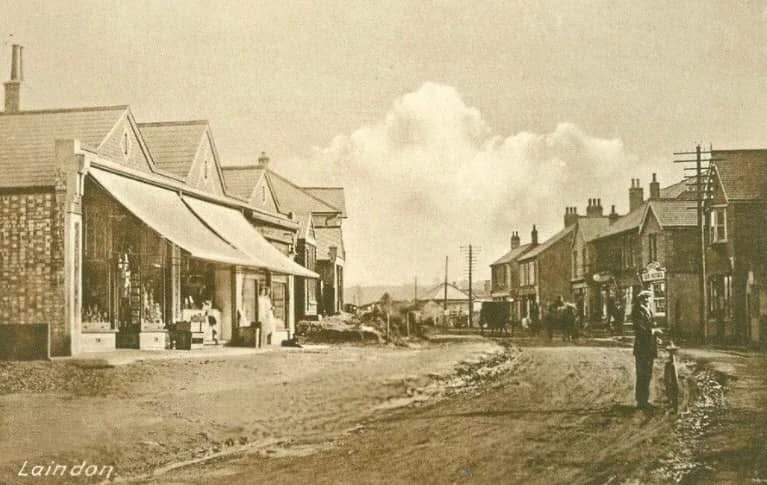
Laindon High Road – The Original Shopping Street
Laindon High Road was once the commercial heart of the old Laindon community. Long before the modern developments that surround the area today, the High Road was lined with small independent shops, businesses, houses, workshops and public buildings. The first shops began appearing around the railway station from the 1890s, following the opening of Laindon railway station in 1888. Some were built as small groups of shops, while others stood individually along the road. It was also common for the shopkeeper and their family to live above or behind the business.
At its busiest, Laindon High Road served a much wider area than Laindon itself. It was an important shopping destination for people from surrounding communities including Dunton, Little Burstead, Langdon Hills and Lee Chapel. Local memories describe a time when shopping was often a daily activity, with many families walking considerable distances to reach the shops. With relatively few cars and limited household refrigeration compared with today, local food shops and other small businesses were an essential part of everyday life.
Shops Around Laindon Railway Station
The area around Laindon railway station became one of the earliest commercial sections of the High Road. Among the businesses associated with this part of the road were T.E. Helmore, a corn and flour merchant, followed by newsagents and tobacconists including M.G. Bersey & Co., H.J. Davis and George Bell. F.W. Hays was remembered as operating a café, tobacconist and confectioner's business, while Alfred Rawley established an estate agency business in 1919. These businesses show how varied the High Road was even during its earliest commercial period.
Other businesses in the area included W.T. Townsend & Son, which operated as a greengrocer and florist, and C. Cyster, who was associated with estate agency work as well as garden plants and shrubs. The presence of estate agents, food shops and cafés around the station was closely connected with Laindon's gradual growth and its increasing importance as a local centre.
Grocers and General Stores
Grocers and general stores made up an important part of the High Road. Businesses such as K. Collins' Cash Supply Stores, A.A. Kimm's Fancy Stores, Coleman's and C. Hayes' Laindon Drug Stores served local residents with a wide variety of everyday products. Henbest was another important name, with the business associated with drapery, hosiery, haberdashery and other goods. Historical records show that individual premises often changed owners and uses, meaning that one shop could have several different businesses during its lifetime.
The old High Road was very different from a modern supermarket. Instead of buying most household goods under one roof, families would visit several specialist shops during a normal shopping trip. Groceries might be bought from one shop, meat from the butcher, vegetables from the greengrocer, bread from a baker and clothing or household goods from another business. This created a busy street where people regularly met the same shopkeepers and other residents.
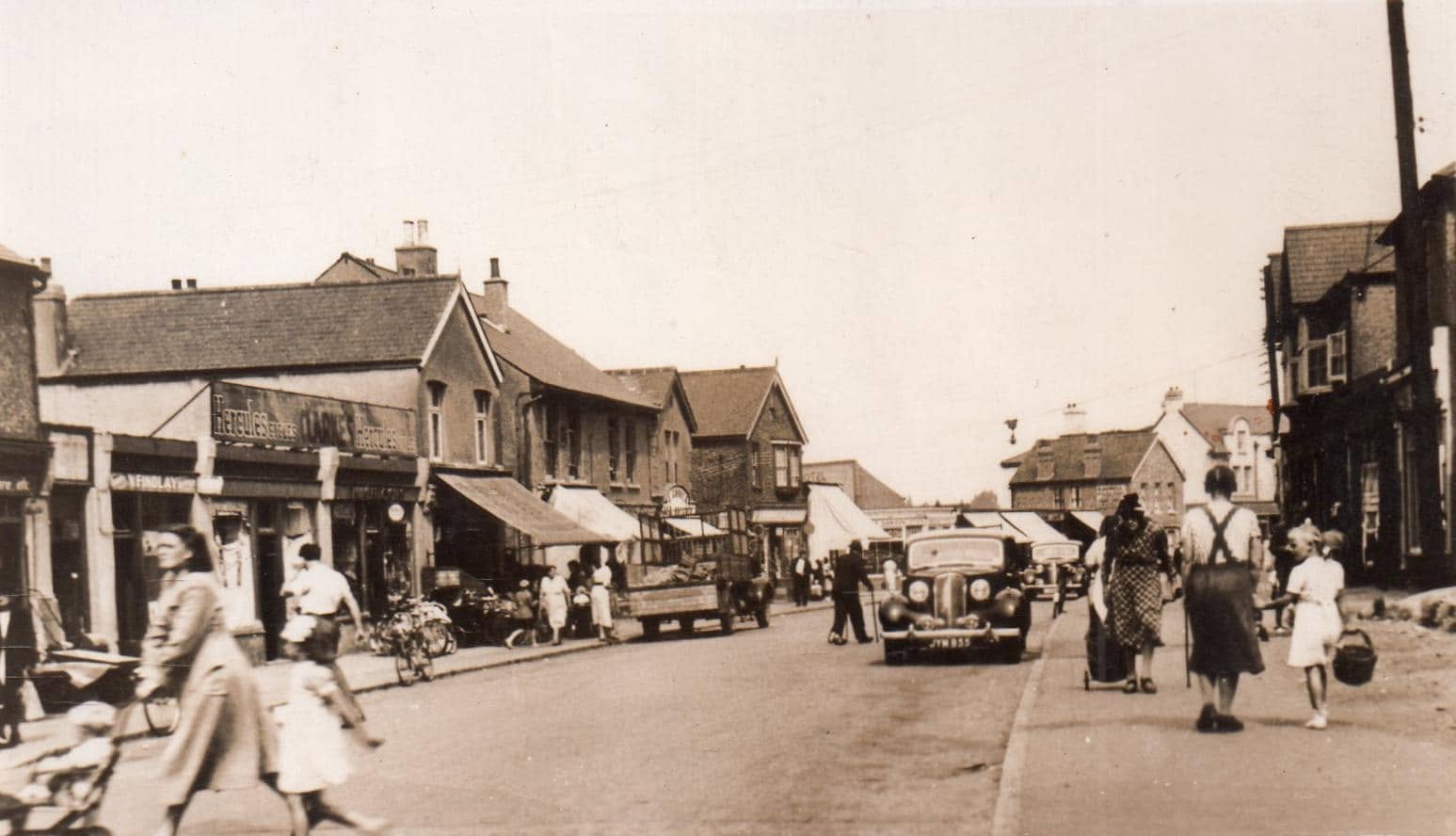
Butchers and Food Shops
Butchers were an important part of Laindon High Road. Names remembered in the historical records include Goddens and Buckenhams, alongside other food businesses that came and went over the years. Buckenhams was particularly associated with a local family, with one branch also connected with farming around Wash Road. These family connections demonstrate how closely the commercial life of Laindon was tied to the surrounding countryside.
Greengrocers were equally important. Businesses such as W.T. Townsend & Son and Coles supplied fruit and vegetables, while other stores sold groceries, confectionery and everyday provisions. Local memories also mention Greens, Reeds and several other businesses in the section around Durham Road. The concentration of food shops reflected the way people shopped at the time, with fresh produce being purchased frequently rather than stored for long periods.
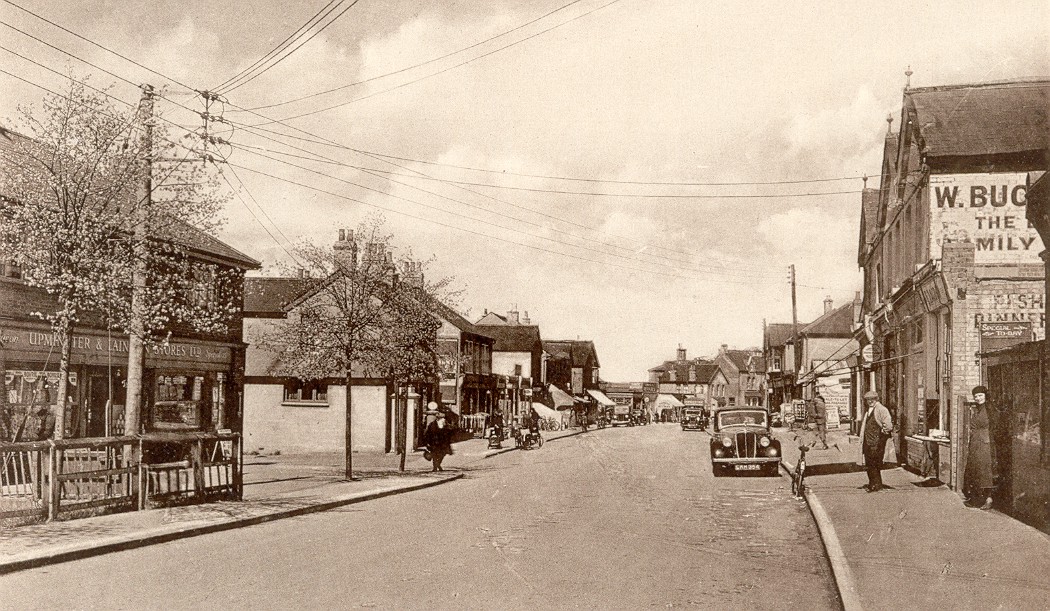
Fishmongers
Fishmongers were another familiar sight along the High Road. Historical records contain several names connected with fish selling, including E. Lagden, T.H. Scotcher, E. Hazelton, E.C. Cole and S. Biggs. Some businesses occupied the same premises at different times, making it difficult to establish an exact sequence for every trader. The surviving records nevertheless demonstrate that fish was an important part of the local retail trade.
Ironmongers and Hardware Shops
One of the best-known businesses connected with Laindon High Road was T.E. Collings. Thomas Elijah Collings operated an ironmonger's business and was also associated with a North Thames Gas agency and cooker showroom. The business supplied the kind of practical household goods that families needed for maintaining their homes. Ironmongers were extremely useful businesses in an era when people repaired and maintained many more household items themselves.
The High Road also contained other businesses dealing in hardware, household goods and building-related products. Their presence reflected the growing needs of Laindon as more houses were built and the local population increased. These businesses were particularly important to tradesmen, farmers and householders who needed tools, fittings and practical supplies.
Electrical and Radio Businesses
As electricity, radio and television became increasingly common in British homes, the High Road gained businesses specialising in electrical equipment. Laindon Radio Electric Service & Music House, Laindon Radio & Television Service and Stanwood Radio were among the names associated with this trade. These businesses did more than simply sell equipment; they also provided repairs and technical services at a time when televisions and radios were expensive possessions that people expected to keep for many years.
The growth of electrical businesses shows how the High Road changed alongside wider society. Earlier shops had concentrated heavily on food, clothing and traditional household goods, while later businesses reflected the increasing importance of electrical appliances and modern technology in everyday life.
Clothing, Drapery and Haberdashery
Clothing and haberdashery were also strongly represented. Henbest's was one of the better-known names, while Johnston's, also associated with Slater's, operated as a haberdashery and dress shop. Other businesses sold wool, hosiery, drapery, clothing and soft furnishings. These shops were particularly important at a time when many clothes were repaired, altered or made at home rather than simply being replaced when they became worn.
Businesses such as these also provided materials for sewing and dressmaking. Wool, thread, buttons, fabrics and other items were everyday purchases for many families. The High Road therefore supplied not only finished clothing but also the materials people needed to make and maintain their own.
Hairdressers and Personal Services
The High Road also had businesses providing personal services. Victor Findlay operated a gentleman's hairdressing business, while other premises were used for specialist services and trades. These businesses were an important part of community life because residents did not simply visit the High Road to purchase goods; they also came there for services that were required regularly.
Chemists and Photographic Services
Chemists were another important part of the old High Road. S. Relph operated as a dispensing and photographic chemist, providing medicines as well as photographic services and other goods. Later businesses also occupied the premises. The combination of pharmacy and photography is a reminder of how much wider the range of services offered by traditional chemists could be compared with many modern pharmacies.
Cafés, Bakeries and Places to Eat
Laindon High Road was also a place where people could stop for food and refreshments. F.W. Hays operated a café alongside his tobacconist and confectionery business, while Shepherd's Restaurant and later Barton's Restaurant & Bakers provided food and bakery services. Cafés were particularly useful because many people walked to the shops from surrounding areas and could stop for a cup of tea before beginning the journey home. Local memories specifically describe refreshments as an important part of the shopping experience.
Newsagents and Tobacconists
Newsagents and tobacconists were widespread along the High Road. Businesses including M.G. Bersey & Co., H.J. Davis and George Bell supplied newspapers, magazines, tobacco, sweets and other small everyday items. These shops were important sources of local information as well as places to buy newspapers. Before the arrival of the internet, television news and modern digital media, newspapers were one of the principal ways people kept up with events in the wider world.
Local memories also mention Boons and Lings in one of the smaller shopping parades. Lings was remembered for toys and bicycles, while Boons sold sweets and newspapers. Photographs and memories preserved by the Laindon & District Community Archive have helped identify these businesses, although the archive notes that some of the surrounding premises remain uncertain.
Post Offices and Banking
Postal services were an important part of the High Road community. Laindon Station Post Office operated from the High Road, while North Parade Post Office served another part of the area. Historical records show that the North Parade Post Office was associated with the Boxshall family, who later emigrated to New Zealand. The existence of more than one postal facility demonstrates how important the High Road was to the surrounding population.
Banking services were also present. Barclays Bank operated from premises on the High Road, while other financial and insurance businesses were represented in the area at different times. The banks provided services that are now often handled online, including cash withdrawals, deposits, payments and financial advice.
Estate Agents and Property Businesses
Estate agents played an interesting role in the development of Laindon. Some of the earliest structures along the High Road were small wooden buildings used by estate agents. Alfred Rawley established his estate agency in 1919, while C. Cyster was also associated with estate agency and garden plants. These businesses were closely connected with Laindon's growth as new homes were built and the area became increasingly attractive to people looking for property.
Builders, Timber and Trades
The High Road and its surrounding area also supported businesses connected with building and construction. Johnson & Co., Churchill Johnson and Hadland's were associated with timber and building supplies around Station Wharf. These businesses supplied materials to the growing community and helped support the building work taking place throughout Laindon and the surrounding villages. Their presence is particularly significant because Laindon was gradually changing from a rural settlement into a much larger residential community.
The Variety of Businesses
One of the most remarkable features of old Laindon High Road was the sheer variety of businesses that could be found along it. The surviving historical research identifies well over the number of shops normally associated with a small rural community, although the Laindon & District Community Archive stresses that its list is not intended to be a complete or perfectly accurate register. Different businesses occupied the same premises at different times, while some names survived under new ownership or changed their type of trade.
This constant change means that there was never one fixed list of High Road shops. A business remembered by someone who grew up in Laindon during the 1930s might not have existed by the 1950s, while another shop may have opened later and remained familiar to residents for decades. The 1949 Basildon Development Corporation property survey is particularly useful because it provides a detailed snapshot of the High Road at that particular moment, but it does not represent the entire history of the street.
The High Road as a Community
Laindon High Road was more than a collection of shops. It was one of the main places where the community came together. People knew the shopkeepers personally, families often returned to the same businesses for years and local traders could become well-known figures in the community. Because many people walked to the shops, the High Road naturally became a place where neighbours met and conversations took place.
The importance of the road was particularly clear before widespread car ownership. People from surrounding villages and districts could walk considerable distances to reach Laindon. The High Road therefore served a much larger population than the immediate houses alongside it. Its shops provided food, clothing, household goods, professional services and entertainment to a wide rural catchment area.
The High Road and Laindon's Changing Population
As Laindon grew during the twentieth century, the character of the High Road changed with it. The original rural community gradually became more densely populated, new houses appeared and increasing numbers of people travelled through the area. The shops responded by offering new types of goods and services. Traditional businesses continued alongside newer trades such as radio, television and electrical retailing.
The road therefore provides a useful way of understanding the wider development of Laindon. The changing businesses reflect changing lifestyles. The old grocer, butcher, fishmonger and draper belonged to an era of frequent local shopping, while electrical shops, photographic services and other specialist businesses reflected the changing technology and consumer habits of the twentieth century.
Laindon High Road Today
Today, Laindon High Road is very different from the busy independent shopping street remembered by older generations. Many of the original shops have disappeared and numerous historic premises have been demolished, altered or converted to other uses over the decades. The road now contains a mixture of homes, modern businesses, food outlets, automotive services and other local enterprises.
Some modern businesses still operate directly on High Road. For example, Laindon Turkish Barber is currently trading on High Road, while Franklin Bodywork Specialist operates at 28 High Road. KFC Laindon also operates from High Road at Harland House. These businesses illustrate how the modern road has developed a different commercial character from the traditional High Road of the early and mid-twentieth century. Laindon Turkish barber Franklin Bodywork Specialist Ltd KFC Laindon - High Road
What Remains of the Old High Road
Although many of the old shops have disappeared, parts of Laindon's earlier character can still be understood by looking at the surviving buildings, road layout and historic landmarks. The High Road still follows the route around which the old settlement developed, and the railway remains an important feature of the area. Historic buildings and landmarks elsewhere in Laindon also help provide context for the street's earlier appearance.
The surviving photographs, maps, property surveys and memories of former residents are therefore particularly valuable. Without these records, it would be extremely difficult to understand just how many different businesses once operated along the road or where individual shops stood. The work of the Laindon & District Community Archive and other local historians has helped preserve many of these memories for future generations.
Remembering Laindon High Road
Laindon High Road deserves to be remembered as one of the most important commercial streets in the history of the local area. For generations it provided the everyday necessities of life, from food and clothing to medicines, newspapers, hardware and household goods. It also provided cafés, restaurants, hairdressers, banks, post offices, estate agents and numerous specialist services.
The names of many of those businesses have now disappeared, but they tell an important story about how Laindon once worked. The old High Road was built around local people serving local people. Its shops were often small, family-run businesses where customers knew the owners personally. The street was busy not because it contained large national retailers, but because it provided almost everything the surrounding community needed.
Today, the businesses found along High Road are very different, but the road remains an important part of Laindon's identity. Its history stretches from the first shops that appeared near the railway in the late nineteenth century, through the busy independent shopping era of the early and mid-twentieth century, to the modern businesses that occupy the road today. The story of Laindon High Road is therefore not simply a story of shops; it is a story of how Laindon itself changed.